


Lighter and Faster Than Cast Iron: Carbon Steel
Why Cast Iron Has Stayed Popular
Cast iron pans last a long time. Once you have one, it settles in — with repeated seasoning, the surface smooths out and stops sticking the way it does when new. That's a big part of why so many people have kept the same cast iron pan for years.
But cast iron has real drawbacks, too.
The one people notice most is weight. That same thickness that makes it durable also means it takes longer to preheat, and lifting or shaking the pan while cooking becomes real effort. It's often the reason a cast iron pan doesn't make it out of the cupboard every day.
Is there a way to keep what's good about cast iron, just lighter?
Carbon steel can be that answer.
Carbon Steel and Cast Iron Are More Alike Than You'd Think
Both are iron. Neither depends on a coating — both build their surface through seasoning instead. Untreated carbon steel typically needs to be seasoned before it's ready to cook on, the same as raw cast iron. Pre-seasoned carbon steel, like H Cookware's, skips that starting point. Like cast iron, it keeps evolving after that: the more you use and season it, the better it gets.
H Cookware carbon steel goes through a special heat treatment during manufacturing, which makes that first seasoning simpler. It also leaves the pan factory seasoned — a protective layer that makes it ready to cook with as soon as it's washed, though it isn't yet slick. That comes with use, as seasoning builds up over time.
More on why H Cookware carbon steel is made differently
The Difference You'll Notice Most: Weight and Thickness
Cast iron is cast — molten iron poured into a mold. Carbon steel is press-formed from sheet steel. At the same size, carbon steel is generally lighter.
Lighter means easier to lift, and easier to move around while you cook. A pan you kept passing over because it was heavy is one you'll actually reach for more often.
Cast Iron Holds Heat. Carbon Steel Responds to It.
Cast iron stores a lot of heat, so it holds its temperature. Once it's hot, turning the flame down doesn't cool it off quickly.
Carbon steel is relatively thin, so its temperature follows the flame more closely — turn the heat up or down and the pan responds fast. It's less that one conducts heat "better" than the other, and more that cast iron holds heat steadily while carbon steel reacts to changes in heat more quickly.
Carbon Steel Also Holds Up Better If You Drop It
Cast iron's weight comes from being cast as a single dense pour, and that same density is what makes it brittle — drop a cast iron pan on a hard floor and it can crack or even shatter. Carbon steel is pressed from a single sheet of steel, and that construction behaves differently under impact: a hard drop could bend it, but it won't crack or shatter the way cast iron can.
That's Part of Why Carbon Steel Suits Korean Cooking
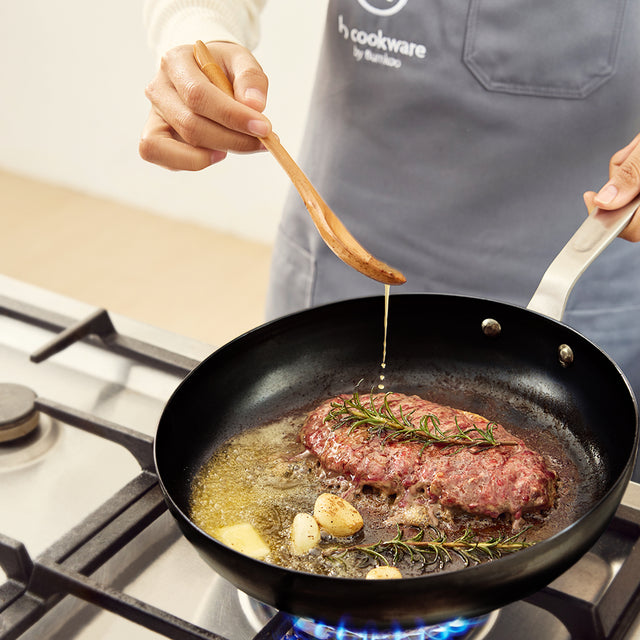
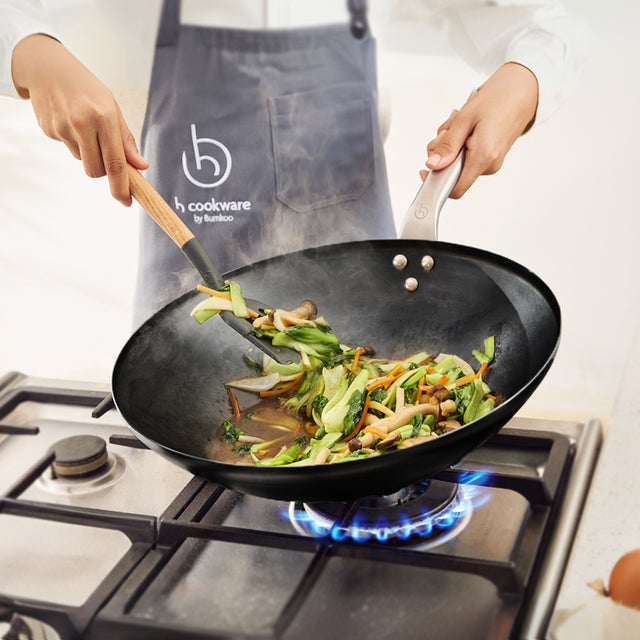
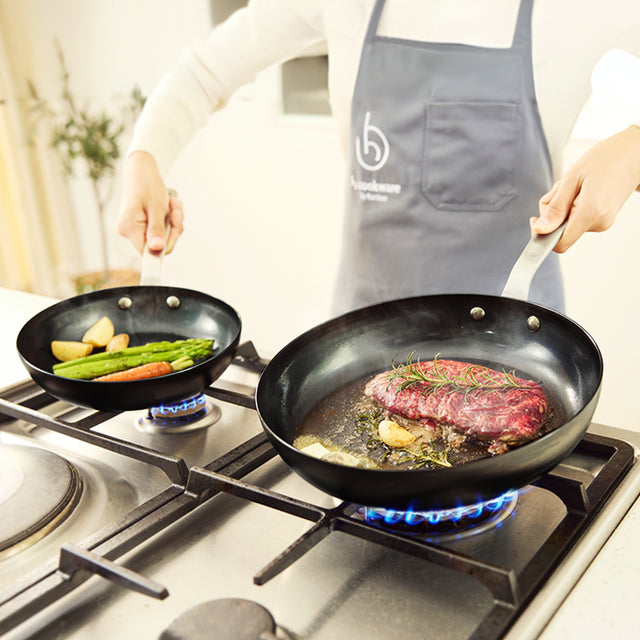
It's not just steak and other high-heat searing. Carbon steel also suits dishes where you're lifting and moving the pan often, or adjusting the flame throughout — fried eggs, bokkeumbap, stir-fried meat, jeon. Those are close to the everyday motions of Korean home cooking.
At a glance, here's how the two compare:

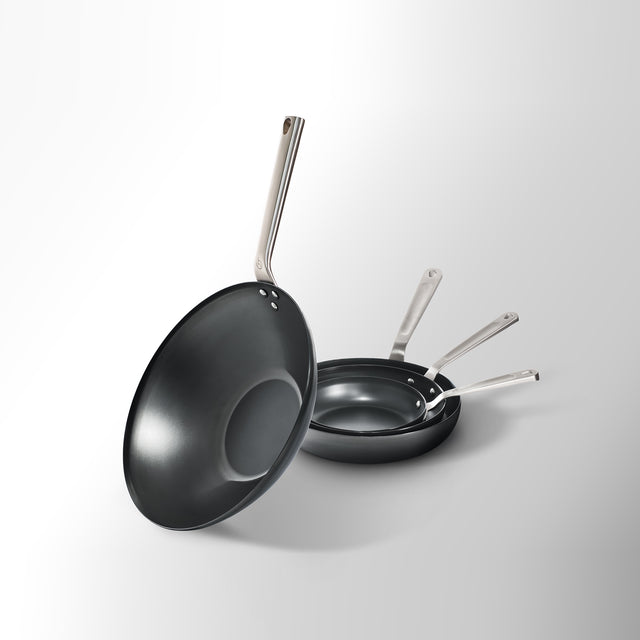
If you've liked cast iron but the weight has kept you from reaching for it, carbon steel can be a good alternative. H Cookware's carbon steel frying pans and woks are built around that same difference — weight and how quickly the pan responds.
You season it in, much like cast iron, just lighter. Carbon steel is also a tool that rewards time and use.

Product list
-
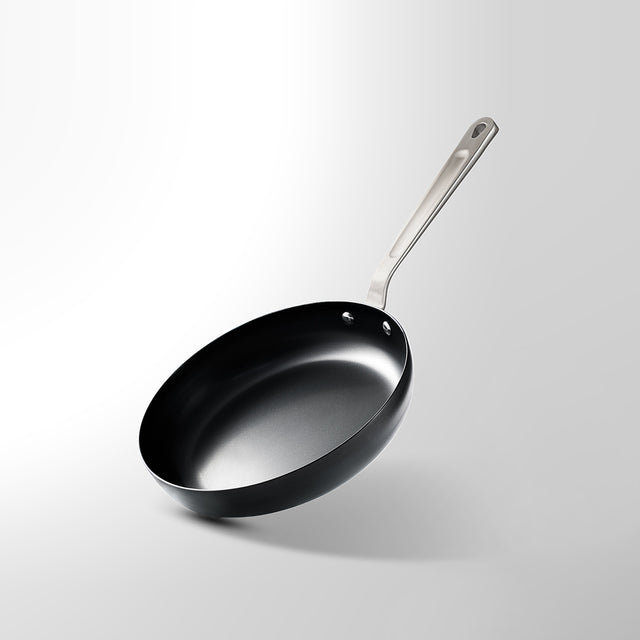
 From ₩85,900( / )
 -
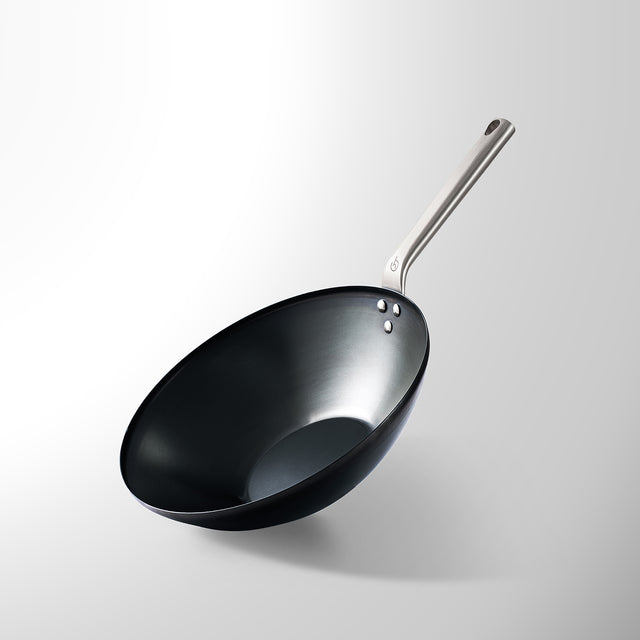
 ₩131,000( / )
 -
 14% off₩375,000
₩437,900( / ) -
 10% off
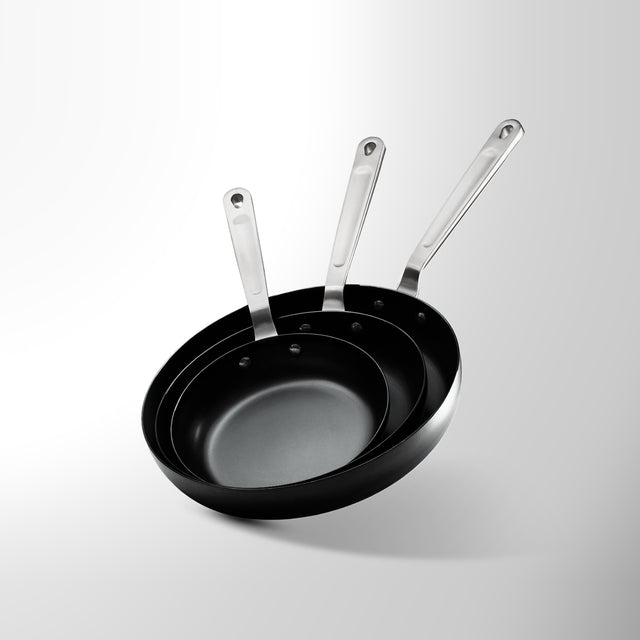
Carbon Steel Frying Pan 3-Piece Set
₩275,000₩306,900( / ) -
 19% off₩709,000
₩876,000( / ) -

 17% off₩465,900
₩562,500( / ) -
 30% offFrom ₩78,750
₩112,500( / ) -
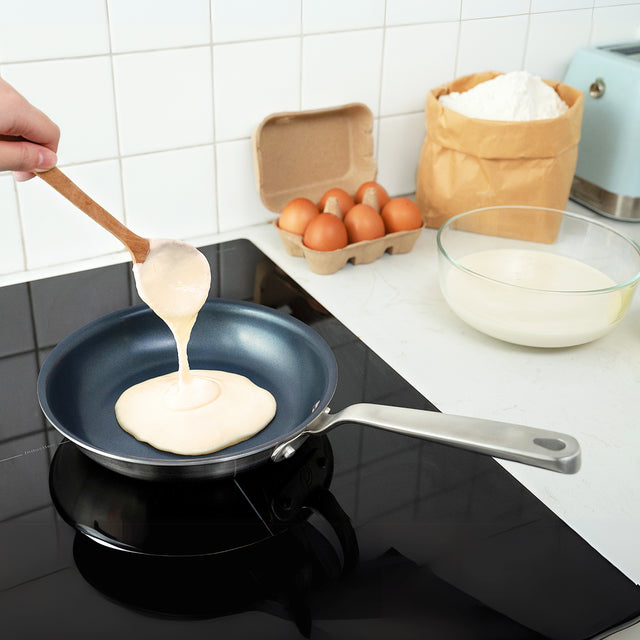 40% off
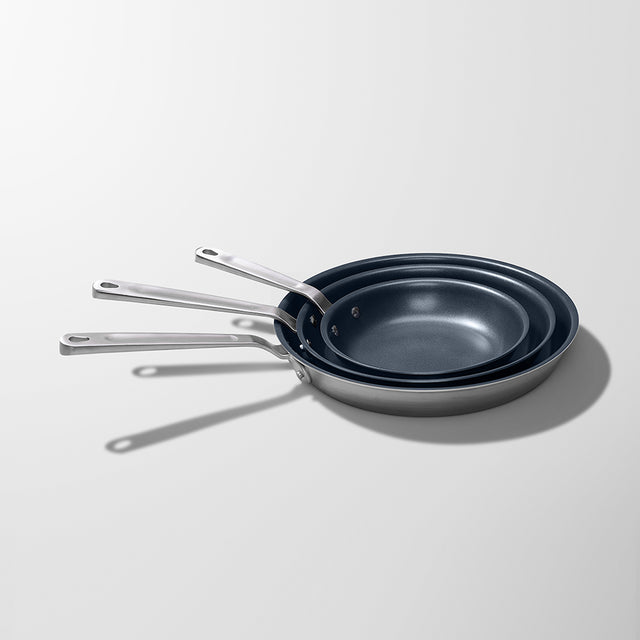
Nonstick Frying Pan 3-Piece Set
₩248,700₩414,500( / ) -
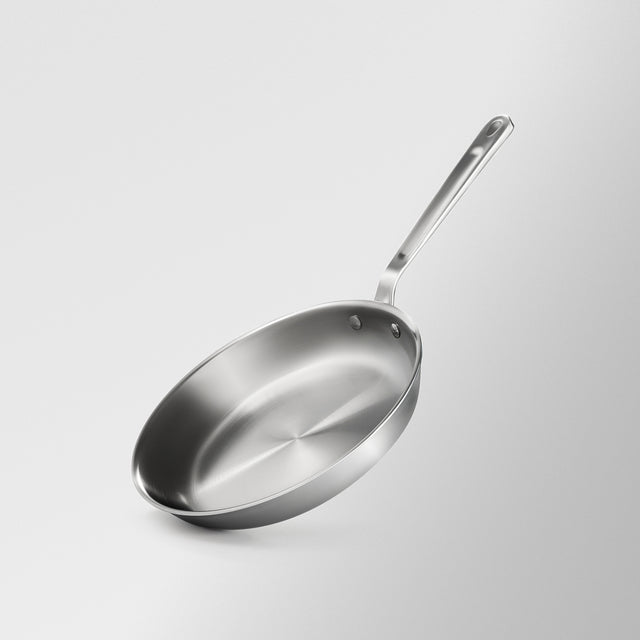
 From ₩89,500( / )
 -
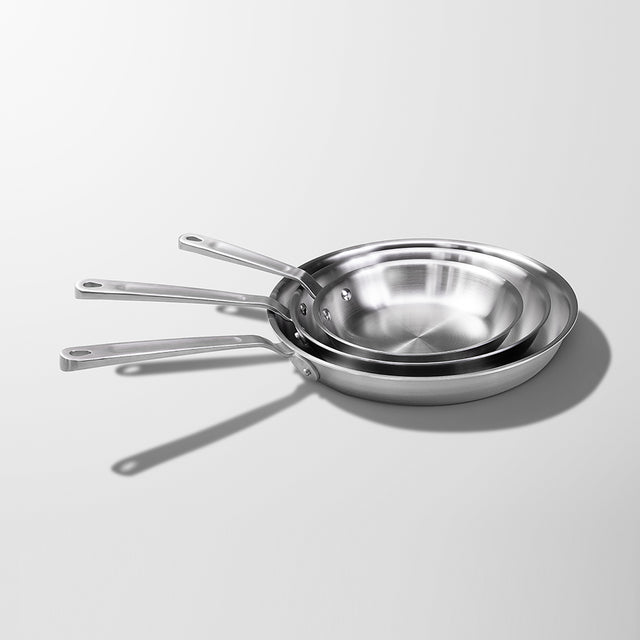
 10% off
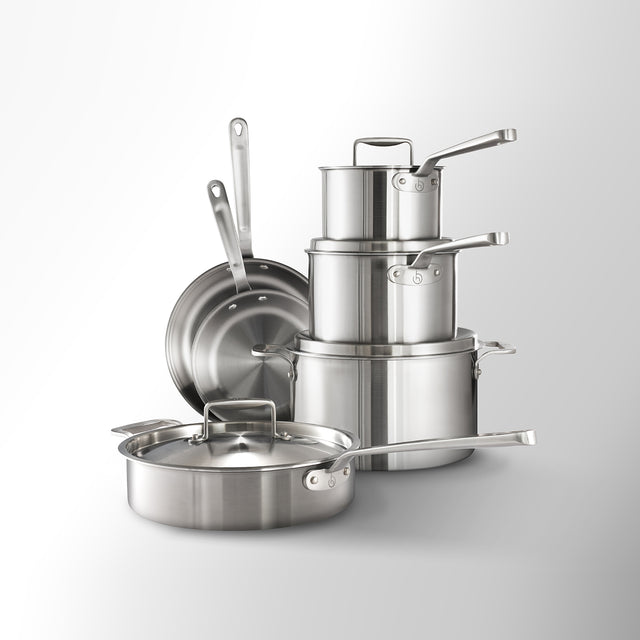
Stainless Clad Frying Pan 3-Piece Set
₩294,500₩327,500( / ) -
 From ₩129,000( / )
 -
 ₩197,500( / )
 -
 From ₩181,000( / )


